As Wedding Know How editors, we write about things that we love and we think you'll like too. We have affiliate partnerships and sponsorship and may generate some revenue from these at no cost to you.
When choosing a metal for your engagement or wedding band, it’s important to consider whether the metal is tarnish resistant. This will ensure that maintenance is kept to a minimum and your ring will look shiny and lustrous for as long as possible.
Here’s a look at the top metals for wedding rings that don’t tarnish and what to do if you already have a tarnished ring.
What is tarnishing?
Tarnish refers to a chemical reaction that takes place on the surface of a metal when certain conditions are met. This results in a coating of corrosion on the outer layer of the metal, which reduces the metal’s luster.
Tarnish is different from rust in that rust eats away at the metal, whereas tarnish only forms on a few top layers of the metal. This effectively protects the rest of the metal from reacting.
There are many ways to prevent tarnish from occurring on metals.
Jewelry Metals That Don’t Tarnish
When buying engagement, wedding rings, or other jewelry that you plan to wear frequently, tarnish resistance is an important consideration. This minimizes the time you have to spend cleaning the jewelry while maximizing its luster and beauty.
Luckily, some metals simply don’t react to external conditions. These are called noble metals, as they resist chemical action. Here are the top metals used in jewelry that resist tarnishing.
1. Platinum

Platinum is among the most valuable and precious metals used in jewelry. It’s the most popular for wedding bands due to its durability, prestige and beautiful luster. It’s one of the rarest metals on earth and has been used in jewelry for several centuries.
Platinum is non-reactive and exposure to oxygen, moisture or air doesn’t affect it negatively. It maintains its luster and color, which is part of its eternal appeal.
Platinum does develop a patina over time, which gives platinum jewelry an aged, antique look. Some people love this, while others have it removed. This patina is formed by scratches and dents in the metal, which displaces the platinum. It can be removed by polishing the jewelry.
2. Palladium
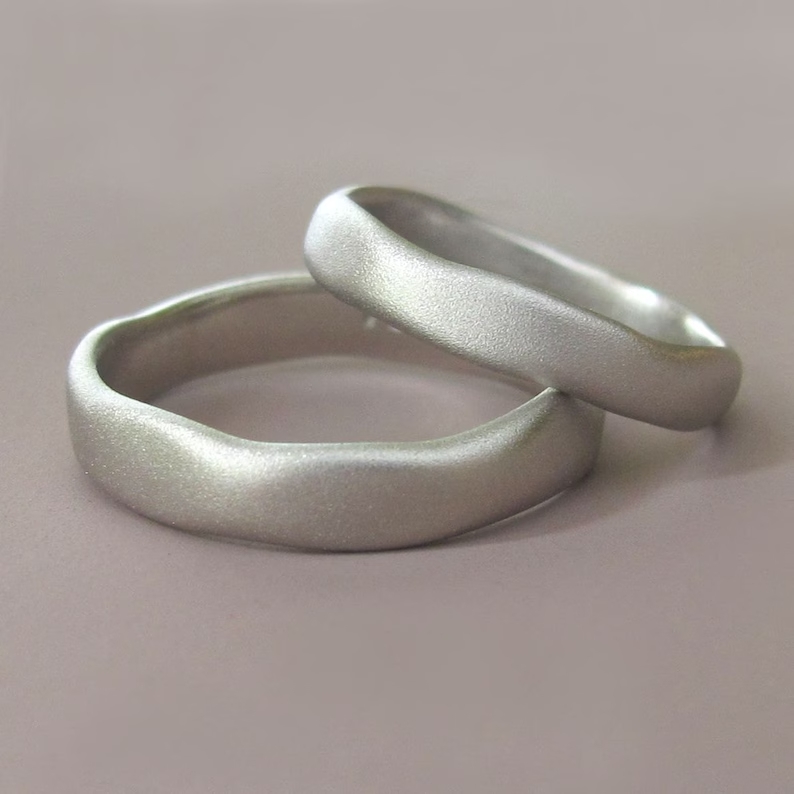
Palladium is part of the platinum group of metals and is highly valuable. It has an excellent white-silver hue and a stunning luster. Because of the recent hike in price of palladium, this metal is among the most prestigious and valuable metals today.
Palladium is slightly more durable than platinum, and more scratch resistant. It’s extremely resistant to tarnish, which makes it perfect for everyday wear.
However, palladium is very rare and not as popular as platinum, meaning that jewelry designs featuring this metal can be limited.
3. Titanium
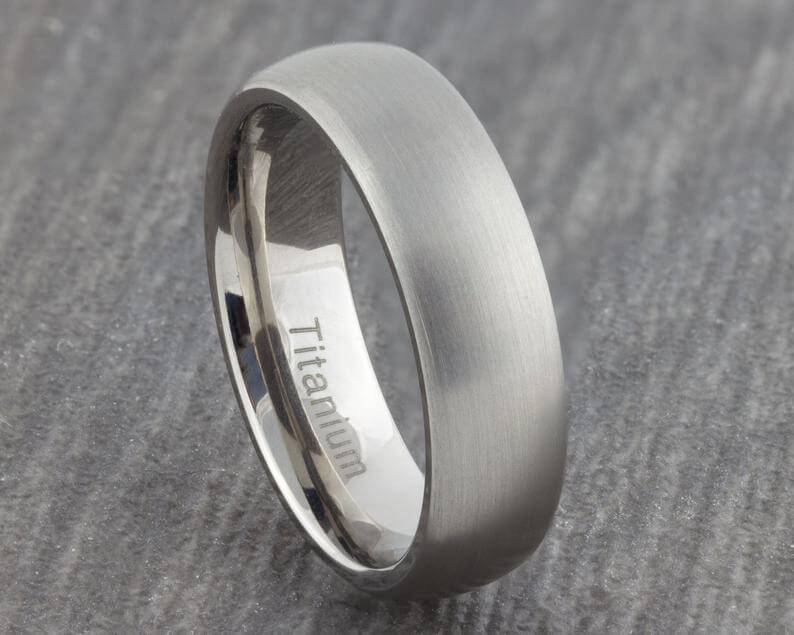
Brushed titanium wedding band by Vincent Faith. Check price HERE.
Titanium is an extremely tough, durable and tarnish resistant metal. It can be used as a substitute for platinum but is very affordable making it a good option for budget conscious shoppers.
Titanium doesn’t scratch which is why it’s a top choice for those who lead active lifestyles. In addition, because it doesn’t tarnish, it can be worn everyday with minimal maintenance required.
Despite its strength, titanium is very light, and many wearers say they barely feel the titanium rings on their fingers. If you like the feeling of a solid, heavy ring, then titanium probably won’t feel very comfortable. Also, note that resizing a titanium ring can be next to impossible.
4. Tungsten Carbide

Much harder than titanium, tungsten carbide is the hardest metal used in jewelry. It’s also one of the hardest substances overall, ranking very close to diamonds on the Mohs scale at 9 to 9.5. It’s a heavy metal and feels substantial when you wear it.
Tungsten carbide is often called the ‘forever polished ring’ because it doesn’t tarnish, scratch, or fade in any way. It can be worn every day with minimal impact on its surface. For the most affordable, durable option, tungsten carbide is probably your best bet.
However, like titanium, tungsten carbide too can’t be resized. In an emergency, it can be removed by shattering the metal with a pair of vice grip pliers.
5. Tantalum
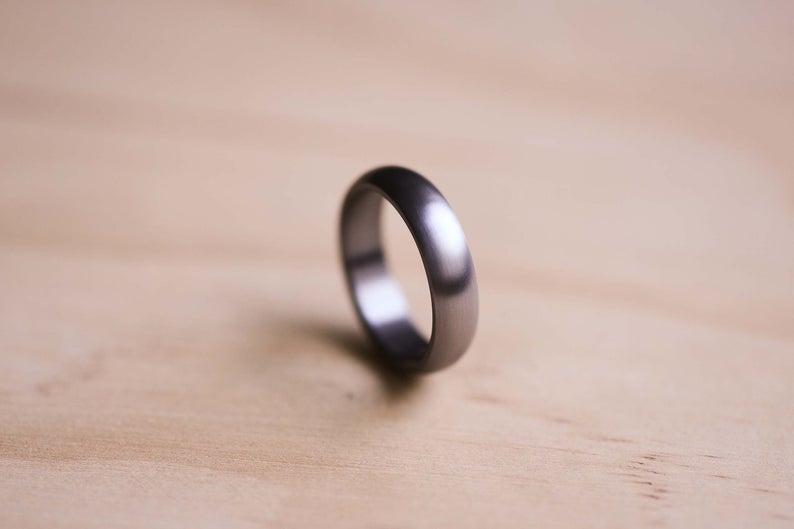
Tantalum is similar to platinum albeit a little darker. It still falls into the white metal category with its shiny whitish hue and luster. Tantalum is highly durable and extremely scratch resistant. It can take heavy exposure and maintain its appearance.
This metal doesn’t tarnish or conduct heat. It’s highly workable and comes at a reasonable price. However, because it’s extremely rare, finding tantalum rings or jewelry can be difficult as not many jewelers tend to work with it.
Primary sources of tantalum are expected to run out in the near future, meaning that it could be an excellent way to get your hands on a unique metal.
6. Cobalt

Very similar to white gold, cobalt is durable, tough and tarnish free. It resists scratching and denting and doesn’t corrode or rust. It’s also very affordable, compared to white gold, and doesn’t require re-plating as white gold does. This makes it a very attractive alternative.
Because of its hardness, cobalt rings can be difficult to resize, and the design options aren’t as varied as white gold. It’s a safe material to wear and is hypoallergenic.
7. Stainless Steel

Stainless steel comes in a variety of alloy types, but the one commonly used in jewelry is 316L stainless steel. The very word ‘stainless’ steel refers to the metal’s ability to resist staining and discoloring. It doesn’t tarnish and instead maintains its shine and luster.
Stainless steel is also highly affordable but it’s not valuable, so if you’re looking for a prestigious ring, this won’t be it.
8. Gold
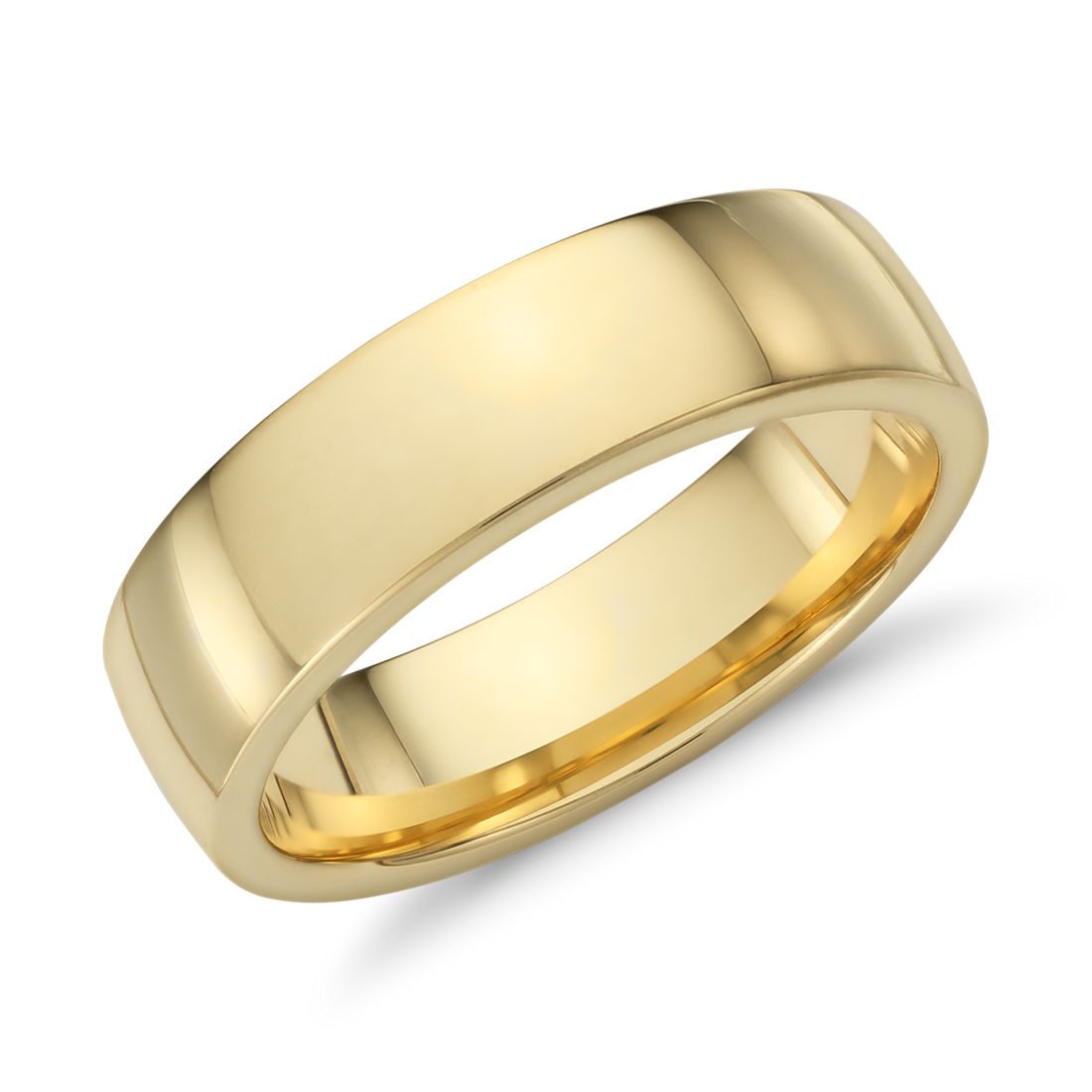
Gold is a highly valued jewelry metal primarily for its resistance to tarnish. Its enduring sheen is due to its inert nature, which means it doesn’t react easily with oxygen or other elements, preventing the formation of tarnish.
Gold jewelry can keep its lustrous appearance with minimal care. However, it’s worth noting that pure gold is soft, so it’s often alloyed with other metals for durability.
Even in these blends, gold’s resistance to tarnish remains, providing lasting beauty and timeless elegance.
9. Rose Gold
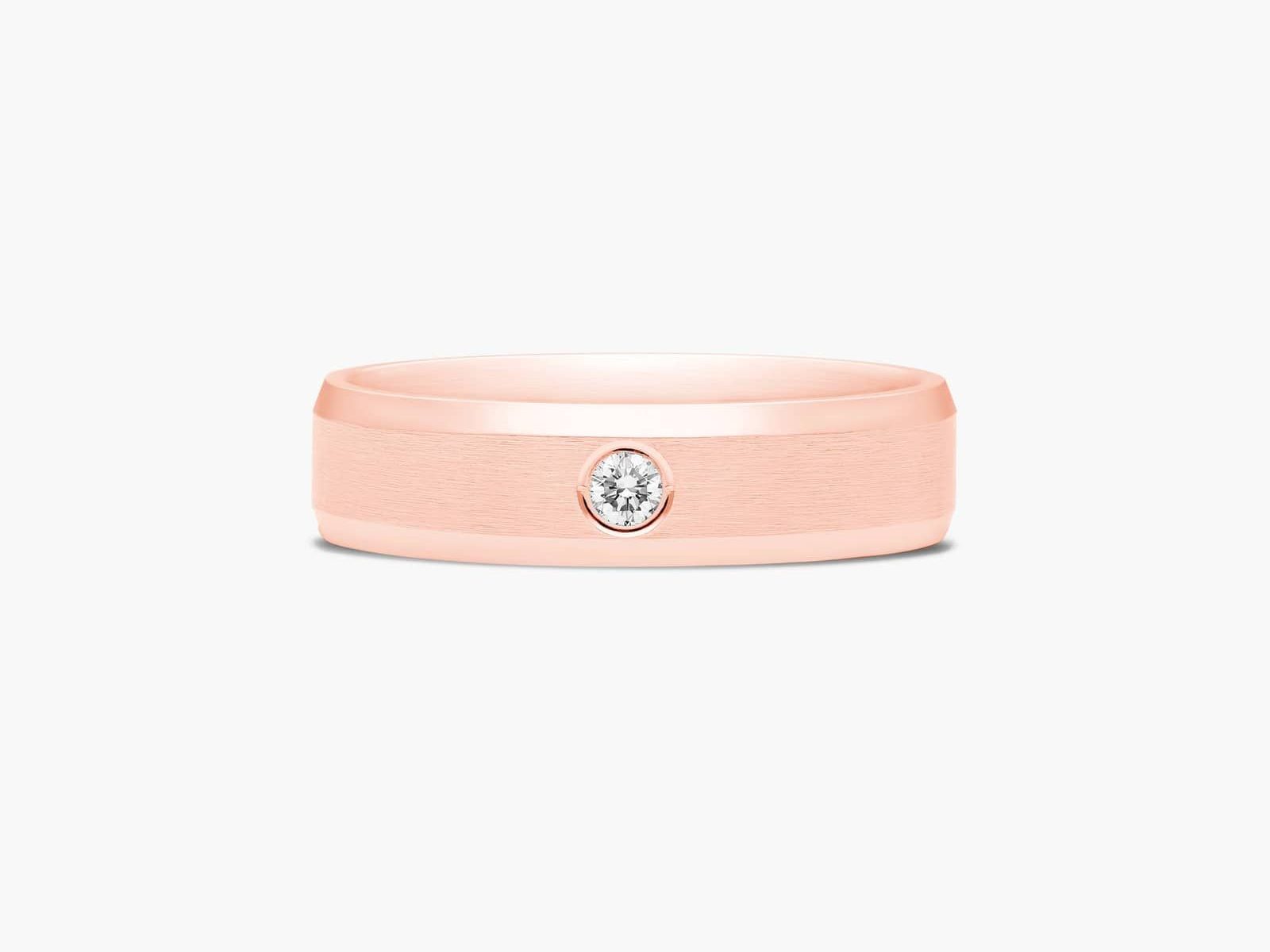
Rose gold is an increasingly popular choice for jewelry due to its warm, pinkish hue and durability.
While it’s not entirely resistant to tarnish, rose gold is less likely to tarnish compared to other metals, thanks to its gold content.
The addition of copper gives rose gold its distinctive color and increases its strength, but can also slightly increase its susceptibility to tarnish.
Notable Mentions
The above list of metals are the most popular types of tarnish resistant metals used to create rings and other jewelry.
However, there are a few notable mentions that technically aren’t metals but are used to make rings:
1. Ceramic Carbide

This highly durable, scratch resistant, tarnish free, hypoallergenic material is perfect for jewelry that looks beautiful and lustrous but comes at a low price point. It’s also lightweight and heat resistant. Ceramic rings cannot be resized and if dropped or hit with impact, they can shatter.
2. Carbon Fiber

Carbon fiber inlay ring. Check price HERE.
One of the toughest materials used to make jewelry, carbon fiber is created by tightly weaving together fibers that create a material that looks like a metal but is extremely light and porous.
It’s much lighter than even titanium. Carbon fiber can resist tremendous pressure, and is a space age material perfect for someone who loves science or the modern world.
How to Remove Tarnish from My Jewelry?
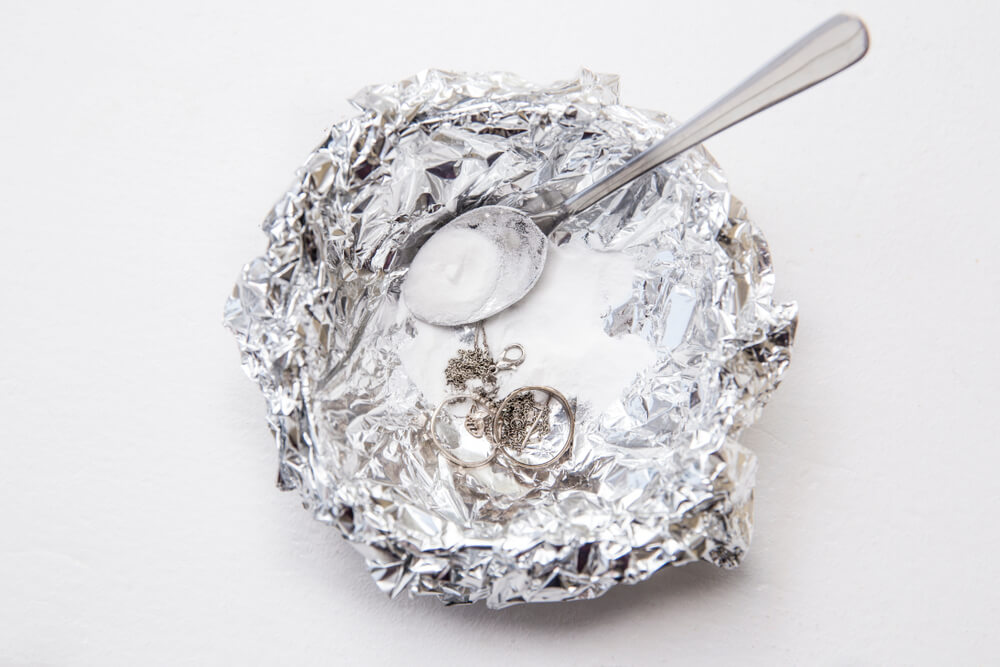
There are several ways to remove tarnish from your jewelry, but the method you use will depend on the type of metal and gemstones your piece has. Here are some general methods:
- Baking Soda and Water: Make a paste with baking soda and water, and using a soft cloth, rub the paste onto your jewelry, then rinse and dry.
- Jewelry Cleaner: Commercial jewelry cleaners are available that are designed to remove tarnish. Simply follow the manufacturer’s instructions.
- Dish Soap and Warm Water: Soak your jewelry in a solution of a few drops of dish soap and warm water for a few minutes. Then gently scrub with a soft toothbrush and rinse well.
- Lemon Juice and Salt: This method is good for tarnished silver. Add juice from half a lemon and a teaspoon of salt to a cup of warm water. Soak your silver jewelry in the mixture for a few minutes, then rinse and dry.
- Vinegar and Baking Soda: Soak your jewelry in a solution of 1/2 cup white vinegar and 2 tablespoons baking soda for two to three hours, then rinse and dry.
Before using any of these methods, make sure to check that they’re suitable for your specific type of jewelry. Some materials can be damaged by these cleaning methods. Always finish cleaning by thoroughly drying your jewelry to prevent water stains or further tarnishing.
Wrapping Up
When considering longevity and aesthetics, choosing jewelry metals that don’t tarnish, such as gold, rose gold, and sterling silver, can be a wise decision.
These metals not only retain their luster and shine over time but also offer a timeless elegance and versatility in design. Ultimately, investing in non-tarnishing metals means investing in jewelry pieces that can last a lifetime and beyond.